The short answer

For anything you insert, choose a toy made of silicone, glass, stainless steel or hard plastic (ABS). These are not porous, so you can get them truly clean. PVC, jelly, rubber, TPE and TPR are porous: dirt and bacteria linger in them, and soft PVC may contain plasticisers. Only use a toy like that with a condom over it, and don't share it.

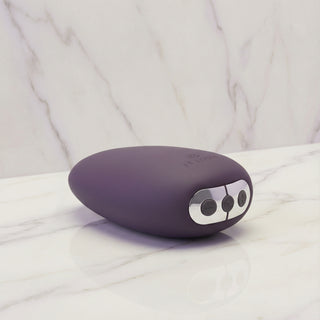
A silicone toy, such as the Mimi Soft Edition, feels pleasant and, with a little care, lasts for years. Of the vibrators, dildos, plugs and prostate toys we sell, about nine out of ten are made of silicone. If you would rather avoid silicone, glass, stainless steel, hard plastic and natural stone are the alternatives to silicone. Readers and customers also often ask us about what they already have at home: an old PVC toy, a vibrator labelled ‘silicone & ABS’, a rose quartz egg.

Unsure about your own toy? Choose the material in our material check and see what it means for you.

This blog is part of our overview on using and caring for a vibrator7 blogs: the most frequently asked questions, cleaning, materials, buzzy or rumbly, honest information, new techniques and the DoxyView all topicsClose

A toy comes very close to you, so you will want to know what it is made of.

Vibrators and other sex toys are made from a range of materials. They may be made of plastic, silicone, rubber, jelly, TPR, TPE or combinations of these. Or of glass, metal or natural stone. Although most are simply silicone.

What are the differences? What should you look out for? Which materials are safe? And what about phthalates? How do you recognise and avoid toxic materials?

Material check

What is your toy made of?

Toys are made from very different materials, but most are silicone: about nine out of ten of the vibrators, dildos, plugs and prostate toys we sell. Answer two short questions and you will see what your toy's material means: whether it is safe, how to keep it clean and which lubricant you can use with it. Along with two or three toys from our shop, should you be looking for something else.

Do you react to silicone? Then take a look at the alternatives to silicone.

1. What material is the toy made of?

Prices and products come live from our shop.

What it says on the label is not always what is inside

First of all, you should know that manufacturers of vibrators and other sex toys are bound by very few rules. It is up to them to make sure a toy is safe, and the Dutch Food and Consumer Product Safety Authority (NVWA) checks this through spot checks. Often the packaging does not even say what material the toy is made of.

In fact, sex toy manufacturers have to disclose very little and are allowed to claim a great deal, except that their products cure or help treat a disease or health problem. That would make it a medical device, which comes with stricter rules.

So companies are not always clear and honest about the materials they use in their products. You are, however, entitled to ask: if a product contains a substance of very high concern, such as certain phthalates, the seller must tell you within 45 days. If you want to be sure your sex is safe, read on.

Phthalates are often in there, but you don't want them

What are phthalates?

Phthalates are chemicals added to plastics, in most cases PVC, to make them more flexible. That is why they are often called plasticisers. All phthalates are plasticisers, but not all plasticisers are phthalates.

Dangerous? Toxic?

Some are. Several phthalates affect fertility and the development of an unborn child, and some disrupt the hormonal system (source). In animal studies, a few phthalates were able to disrupt the development of the testicles. Plasticisers are slowly released from the material and can enter the body through the skin. And a toy containing phthalates can irritate the genitals.

Phthalates are often mentioned in the same breath as a whole list of diseases, from diabetes to autism. We cannot go that far: whether they really contribute to these is hard to establish, and it depends on how much you are exposed to them and for how long. If you are pregnant or trying to become pregnant, however, you have extra reason to avoid them.

Are phthalates banned in sex toys?

Four of them are, more or less. At first a European ban applied only to children's toys, which is why we used to say here that they were not banned in sex toys. That is no longer the case. Ordinary consumer products, including a dildo, may now contain no more than 0.1 percent of the phthalates DEHP, DBP, BBP and DIBP, and the same applies to electrical devices such as a vibrator. In practice, that amounts to a ban.

But that limit does not apply to all plasticisers. When the NVWA had dildos made of soft PVC tested, they all stayed below the limit, but they did contain other plasticisers, and nobody yet knows exactly whether those are harmful. What is more, the NVWA has no oversight of what you order from an online shop outside the European Union. So make sure your toy contains no phthalates. After all, why take the risk?

Translucent purple rabbit vibrator with beads in the shaft, on light grey fabric

How do you recognise phthalates?

You can recognise phthalates by a chemical smell, one that lingers even after you have washed the toy. These toys are also often made of see-through, brightly coloured material. The material can feel slightly sticky, and these toys are often very cheap. If the packaging says ‘jelly’, you already know enough.

Do you see a vibrator made of transparent pink? Is it very cheap? And from an unknown brand? Then there is a good chance it contains phthalates.

Kim saw how such a toy can end up with a blue, see-through jelly dildo with glitter in it. The dildo sat in its box for a while. When the box was opened again one day, all that was left was a sticky goo. It had not melted: it had been ‘sweating’. Most likely that was plasticiser slowly seeping out.

Mood image: toys made of silicone, glass, stainless steel and rose quartz side by side on a green table

Porous versus non-porous materials

Porous means the material has tiny holes in it, too small to see. Dirt and bacteria get into them, and washing will no longer get them out.

A porous toy always retains a little bodily fluid, lubricant, dust or dirt. As a result, bacteria can multiply and mould can grow, so it can give you or your partner an infection again and again. There is also a risk of passing on STIs if the toy is shared between partners. Putting a condom over it keeps it reasonably clean. But preferably do not share a porous toy, and never use the same porous toy both vaginally and anally. The less porous the material, the better.

Non-porous materials: better but more expensive

Non-porous materials are usually of better quality, but generally also more expensive. Dirt and bacteria cannot get in, they can be cleaned thoroughly and they last longer. Most are hard, but silicone (a soft material) is also non-porous. And note: all materials that contain phthalates fall into the porous category.

Sex toy materials: which material is best?

That is actually quite personal, because they all feel different and each has its own advantages and disadvantages. But there are clear differences. And there are also materials you should avoid, or at the very least handle with real care. Below you can see them side by side, with how to clean them and which lubricant goes with them.

MaterialPorousCleaningLubricant
SiliconeNo.Mild soap or toy cleaner. Without a motor, it can often be boiled.Water-based, no silicone lubricant.
Hard plastic (ABS)No.Water and mild soap or toy cleaner.Almost any lubricant.
GlassNo.Mild soap. Sometimes the dishwasher, no boiling water.Any lubricant.
Stainless steelNo.Mild soap. Solid steel can often go in boiling water.Any lubricant.
Rose quartz and jadeNo, as long as the stone is undamaged.Lukewarm water and mild soap. Only boil eggs the first time.Water-based, sometimes others too.
TPE and TPRPartly.Warm water and soap or toy cleaner. Never boil.Water-based only.
PVC, jelly and rubberYes.Toy cleaner. Never boil.Water-based, with a condom over it.
CyberskinYes, very.Toy cleaner, dry thoroughly. Replace after a year.Water-based, with a condom over it.

Silicone: is a silicone dildo safe?

Yes. A dildo or vibrator made of good silicone is not porous, you can clean it thoroughly and it will last for years. Just keep two things in mind: it really has to be silicone all the way through, and you shouldn't use a silicone-based lubricant with it.

Silicone takes on the warmth of your body, and it transmits vibrations and pulses well. With the right use and care, a good silicone product will last a lifetime. A product made of 100 % silicone is a safe product. Nothing is completely without risk, but you won't get much closer than this.

Why is almost everything made of silicone?

Because it simply works very well. Of the vibrators, dildos, plugs and prostate toys we sell, around nine out of ten are made of silicone, and almost all of the vibrators. Silicone is soft yet firm, and nothing soaks into it. It is water-resistant and, without a motor, can often be boiled as well.

For the same reason, medical-grade silicone is the most widely used material for menstrual cups, something that sits in the vagina for hours at a time. The material has been studied for that purpose and almost never causes irritation.

Be aware: it isn't always 100 % silicone

There are also products, often from cheaper shops, that are made of a blend of silicone and other materials. Or they say silicone, when in fact they are thermoplastic rubber (TPR). And not all silicone is created equal. You can usually test this by twisting the product:

  1. Hold the soft part at both ends and twist or squeeze it firmly.
  2. If the product is made of 100 % silicone, the colour and texture stay the same throughout.
  3. If you see whitish streaks appear, it is a blend of materials. In that case, treat it as a porous toy: use it with a condom over it.

A safe choice, for silicone products too, is a good, reliable brand.

Medical-grade silicone or platinum silicone: what should you look for?

On the packaging or the product page you will often see ‘medical-grade silicone’ or ‘body safe’, as with the Rocky. By this, the manufacturer usually means silicone made for contact with skin and mucous membranes. Sometimes it also mentions platinum (‘platinum cured’): this is the name for silicone that has been cured with platinum. One manufacturer of silicone rubber had its grades tested on skin by an independent laboratory. Several platinum-cured grades were certified as safe for skin, but not a single tin-cured grade passed that test. Tin-cured silicone is, however, usually a good deal cheaper.

Good silicone doesn't smell of anything, not even when the toy has just come out of the box. If it smells of chemicals, don't use it. And choose a brand you know, one that states on the packaging or the product page what it is made of.

Pros and cons of silicone, and how to care for it

Silicone is odourless and colourfast, often hypoallergenic (like the Aludra) and a wonderful material for penetration, for example in a g-spot vibrator. The downsides: because it is such a good material, silicone toys are more expensive, and silicone-based lubricant damages them. If you still want to use a silicone lubricant, test it first on the base of your toy. We wouldn't do it ourselves.

Wash it before and after use with a mild, unscented soap or a toy cleaner, such as our own Cleaner. A neutral hand soap is fine too, as long as you rinse it off well and let the toy air dry. You can read how to clean a toy step by step in our blog on cleaning vibrators. You can also boil the toy (three minutes), or put it on the top rack of your dishwasher. (But only if there are no electrical components inside. So this is not possible with vibrators.) And check the instructions first: the Slanke buttplug can be boiled, while the Aneros Helix Syn loses its shape.

Take the batteries out after use and it will last longer. Silicone toys can last for years, but they can tear. So keep them away from sharp objects.

Can you be allergic to silicone?

It's possible, but rare. With medical-grade silicone, there are only isolated cases of skin rash or irritation. Itching or a burning sensation can also come from something else: from soap or a scented product, from the lubricant, from the latex in a condom, or from an infection. And a cheap toy can contain substances left behind during manufacturing.

Do you get symptoms after using a silicone toy? Then stop using it, and see your GP if it's the first time or if the symptoms keep coming back. If in doubt, they can arrange a patch test so you know what you are reacting to. If you'd still like to play in the meantime, choose something made of glass, stainless steel or hard plastic. You can read about the options below.

I'm allergic to latex: can I use a silicone vibrator?

Yes, that's fine. Latex is natural rubber, made from the sap of the rubber tree, and what you react to is the proteins in it. Silicone is something else entirely; the We-Vibe Wand 2 even states explicitly that it contains no latex. If you put a condom over it, choose a latex-free condom. And a toy made of rubber, or of something that stretches a very long way, may well contain latex.

Is silicone the softest material?

Not always, but if you're used to PVC, you'll certainly be pleased with a silicone vibrator. Silicone feels much softer and takes on the warmth of your body. For real softness, look for a thick layer of soft silicone, as on the Aludra: Birgit tested it for us and singled out the soft material in particular.

Silicone with ABS: can you trust that combination?

Yes, usually. Many vibrators and prostate massagers have a hard core or handle made of plastic, often ABS (hard and non-porous), with silicone around it. The Aneros Helix Syn for prostate massage, for example, has a firm core with a silicone outer layer, and the Mila is made of silicone and ABS. If the brand is unfamiliar, do a quick twist test on the soft part.


Rather avoid silicone? These are the alternatives

We get asked this a lot. Does your skin react to silicone, or would you rather avoid it for another reason? There are other safe materials: hard plastic (ABS), glass, metal and natural stone. They are non-porous (stone as long as it is undamaged) and easy to keep clean. What they lack is the softness of silicone, and they hardly ever vibrate. The safe toys we stock without silicone are all together in our collection alternatives to silicone.

Looking for a dildo made of glass, steel or stone? Our guide which dildo suits you shows you in two questions which one is right for you.

What we have without silicone, by type of toy

Type of toyWithout siliconeGood to know
VibratorHardly any: almost every vibrator contains silicone.Glass, metal and stone do not vibrate.
DildoGlass, such as the Drive Me Crazy, stainless steel, such as the Joy Wand, and rose quartz, such as the Grand Wand.Hard and smooth. Use plenty of lubricant.
Butt plugGlass, such as the Gildo No. 26, and metal, such as Chic en gracieus.Always with a flared base.
Prostate toyHard plastic, such as the Aneros Helix Trident.No motor: you move it with your pelvic floor muscles.
Yoni eggsJade and rose quartz, such as the rose quartz eggs.Boil them before first use, as described below.
Cock ringTPR or TPE, such as the Pleasure Rib Ring.Semi-porous, but you wear it around you, not inside your body.
MasturbatorThe inside is usually TPE, as with the Sono No. 94.Wash thoroughly and let it dry completely.
DilatorWe only stock silicone ones.If in doubt, ask your pelvic floor physiotherapist or doctor.
Hollow strap-onYes, but these are made of PVC or latex.Porous: only use with a condom over it. Avoid the latex ones if you have a latex allergy.

Are there vibrators without silicone?

Hardly any. Even a hard plastic vibrator often has a coating or buttons made of silicone, so check the label carefully. If you or your partner react to silicone, glass and stainless steel are a safe choice. They do not vibrate, though. If you still want a vibrator, put a condom over it so the silicone does not come into contact with your genitals, inside or out. As far as we are concerned, that is a perfectly good solution. If you also react to latex, choose a latex-free condom. And if you are not sure where the reaction comes from, it is worth asking your GP.

Hard ABS plastic

ABS is a widely used non-porous hard plastic. It is affordable, easy to clean, transmits vibrations well and is generally smooth, although some lower-quality toys can have seams. The vibrations can feel too intense, though, it makes more noise, and it can feel hard and cold (not natural). Moisture, UV light and heat do not do it any good either. Wash it before and after use with water and mild soap or a toy cleaner. The Aneros Helix Trident, for example, is made entirely of smooth ABS and can be used with both water-based and silicone-based lubricant.

Incidentally, with an unknown brand you do not know what is in it: far too much cadmium has been found in a hard ABS stick vibrator before.

Glass

Glass is hard, smooth and non-porous. With glass toys you often hear Pyrex, Lucite and acrylic mentioned, but Lucite and acrylic are clear plastics, not glass. Pyrex is a brand name for borosilicate glass, which copes better with temperature changes than ordinary glass. The Drive Me Crazy, for example, is made of it.

All lubricants are safe to use, the smooth texture glides easily, and you can place glass in warm or cool water for warm and cold sensations. (Never make it extremely hot or cold; this can damage the glass.) Test it on your wrist first. A glass toy can never vibrate or buzz.

Wash glass with mild soap and water. Some can go in the top rack of the dishwasher, but not in boiling water or the freezer. Glass toys are usually very sturdy, but if a piece breaks off or you spot a crack, throw it away immediately. So check it before every use.

Metal

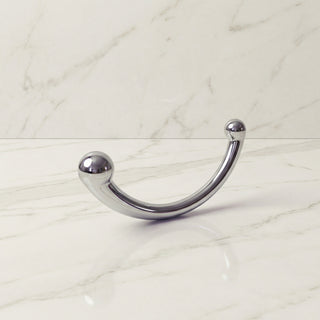
Metal toys are hard, smooth and heavy. Like glass, they are easy to clean and can be used for playing with warmth and cold. Most are made of stainless steel or aluminium, but they also come in silver and gold. Any lubricant can be used with stainless steel, and the solid Joy Wand can even go in boiling water. The gold-coloured plug Chic en gracieus, on the other hand, cannot. Warm it up with warm tap water, never in the microwave.

Natural stone: rose quartz and jade

Natural stone feels cool at first and then slowly takes on your body heat. An undamaged, smoothly polished stone is non-porous. For those who find meaning in it: rose quartz has symbolised love, gentleness and inner peace for centuries. Check it before every use: if it has a crack or a sharp edge, stop using it. Clean it with lukewarm water and a mild soap. Which lubricant you can use is stated on the product page: water-based for the Grand Wand, and silicone or oil as well for the Curved G-spot.

Can rose quartz yoni eggs be boiled?

Yes, the eggs can, as long as you do it carefully. Before first use, boil the rose quartz yoni eggs or the jade ones for ten minutes. Place them in cold water and let the water heat up slowly together with the eggs, so the stone does not break. After that, warm water with a mild soap is enough. Do not boil a rose quartz wand or plug: the heat can make the stone crack.

TPE and TPR: only for what you put on

TPE and TPR are not silicone, and a reaction to them is rare. But they are semi-porous. As far as we are concerned, that makes them an alternative only for things you put on or slide into: a cock ring such as the Pleasure Rib Ring, or a masturbator.

Wood and ceramic: we steer clear

There are also dildos and plugs made of wood or ceramic. We do not sell them, and we steer clear of them: how safe such a toy is depends entirely on how it has been finished, and we cannot judge that well enough. For anything you insert, we recommend silicone, glass, stainless steel, hard plastic or natural stone.

Materials with risks: TPR, TPE and Cyberskin

Is TPE safe?

For something you use externally or put on, such as a masturbator or penis sleeve, yes, as long as you keep it properly clean. TPE and TPR are soft, stretchy plastics, usually free of phthalates, but they are semi-porous: you can never get them completely clean. If you insert something made of TPE, put a condom over it.

You'll regularly come across TPR and TPE in sex toys, either soft or actually hard and firm: every manufacturer makes its own blend. TPR is less porous than Cyberskin but more porous than silicone. That's also why it's cheaper, and why you often find it inside masturbators, such as the Sono No. 94 and the Tenga Air Tech Squeeze Strong, and in many other masturbators.

Pros and cons of TPR and TPE, and how to care for them

Vibrations generally travel well through this material. It is usually phthalate-free, lasts fairly long and is often inexpensive. It is a synthetic material rather than natural rubber, so it is usually suitable if you have a latex allergy too. However, it cannot be sterilised or cleaned 100 %, and a toy made of TPR or TPE is best not used both anally and vaginally.

Wash it thoroughly before first use and after every use with warm water and mild soap, or preferably with a toy cleaner. Let it dry completely, inside as well. Silicone lubricant and oil can damage TPE, as the manufacturer of the Romp Dash also points out, so use only water-based lubricant.

Cyberskin and other realistic materials

This material is known for being used to make toys that look and feel realistic. It is soft, smooth and flexible, just like human skin. However, the material is very porous and difficult to clean and keep clean. And like jelly toys, these toys can contain harmful phthalates. So it is best to use them with a condom. The material often has a strong rubbery smell and does not last as long. We recommend replacing toys made of this material after a year.

Light blue translucent vibrator with a black cap on a stone slab, with the text PVC vibrator

Jelly, PVC and Sil-A-Gel

Is a PVC or rubber dildo safe?

Not really. A dildo made of PVC, jelly or rubber is porous and can contain plasticisers. So only use it with a condom over it, and don't share it. If you are buying something new, choose silicone, glass or steel.

Jelly is usually just PVC that has been softened with a lot of plasticiser, sometimes more than half of its content. You see it everywhere because it is a cheap material that can easily be moulded into almost any shape. It is porous, hard to clean properly and cannot be sterilised the way silicone can. Rubber may also contain latex.

But for the sake of completeness: even without the banned phthalates, other plasticisers can still be present. Not sure whether it contains phthalates? Then use a condom. Quite sure it doesn't? Then still use a condom. Because the material is porous, you can easily pick up an infection, or worse. And store these toys somewhere cool, separate from your other toys.

Sil-A-Gel

Silagel or Sil-a-gel, however you spell it, is NOT silicone. The name certainly sounds like it, which makes it confusing. It is an additive used to make other materials softer, and it feels slightly 'gel-like'. Some say it is antibacterial, others that it is toxic, and how toxic we do not know. What we do know is that Sil-A-Gel is a porous material that cannot be cleaned properly, which makes it a potential source of infections.

Which lubricant goes with which toy?

Lubricant that is water-based suits every toy and every condom. Silicone-based lubricant can be used with glass, metal and hard plastic, but not with silicone toys, because it damages the material. Never use oil with a condom, and with TPE, avoid both silicone and oil.

When in doubt, we simply reach for Hydra+, our own water-based lubricant: safe with latex condoms and with all toys, including silicone, and slightly thicker in texture. You will find more choice among our water-based lubricants, and we have looked into what we consider the best lubricant. If you are looking at another brand, check what is in it too: not every ingredient in a lubricant is equally kind.

Sam now knows what the wrong lubricant can do. A bottle of silicone lubricant leaked in the bag of toys, and afterwards a few of them had melted and had to be thrown away. So it is better to keep the bottle somewhere else.

Which lubricant is safe with anal toys?

For anal use too, water-based lubricant is safe with every toy. The anus does not produce its own moisture, so use plenty of lubricant, ideally a slightly thicker kind that stays put longer. With a steel or glass plug, silicone-based lubricant is fine as well.

For anal play, only use a toy with a wide base, such as the glass Gildo No. 26 or the metal Chic en gracieus, so it cannot slip all the way in. If you are just starting out, choose one of the butt plugs for beginners and insert it slowly. If the toy goes from anal sex to the vagina, wash it thoroughly first, or put on a fresh condom. With a porous toy, never switch between anal and vaginal use.

How do you make sure you buy a safe toy?

There is still a lot of research to be done and better regulation of sex toys to be made. Even so, you can make sure you buy a good, safe toy.

  • Buy from a good brand and a reliable manufacturer, such as Lelo, We-Vibe, Womanizer, Svakom or our own brand House of Delight.
  • For anything you insert, choose silicone, glass, stainless steel or hard plastic. That way you are always on the safe side.
  • Be critical when you see a cheap product, especially from an online shop outside the European Union.
  • Not sure about the quality of the material of a product you own? Then use a condom over your vibrator, dildo or other toy.
  • Is the material discolouring? Do you see stains on it? Has the material changed? Is it starting to feel greasy? Don't take any risks and throw the toy away immediately.

This page used to say that our shop only sells toys made of the best silicone. It is not that simple: we also sell toys without silicone, which you will find together under alternatives to silicone, as well as hollow strap-ons made of PVC or latex. What a toy is made of is stated on its product page.

What should definitely not be in your toy

Phthalates, also known as plasticisers, which you can recognise by their chemical smell, even after washing. Unfortunately, phthalates can also be odourless. Soft toys with no material listed on the packaging have also been found to contain solvents, such as toluene, cyclohexanone, tetrahydrofuran and phenol (source). They do not belong there. If a new toy smells strongly of chemicals, don't use it.

When should you see your GP?

After using a toy, do you have itching, a burning feeling when you pee or during sex, or a vaginal discharge that is different from what you are used to? Then stop using that toy, and see your GP if this is the first time you have these symptoms, or if they have not eased after two weeks. It may be a vaginal infection, such as a yeast infection. If your skin becomes irritated or discoloured, stop straight away as well and ask a doctor for advice.

Finally

With toys, buying cheap often means buying twice. A good silicone vibrator that lasts for years is better value in the end than buying one jelly toy after another, and far kinder to your body.

And is there still one of those old, translucent ones lurking at the back of a drawer? Then you know what to do. Not sure yet which one to choose? Our vibrator quiz will point you in the right direction in just a few questions.

Frequently asked questions

Answers to your questions ClickTap on a question for the answer
What can you use as a dildo?

Ideally something made for the purpose: a dildo made of silicone, glass or steel. Anything from around the house must be smooth and intact and must not be able to break: no glass bottle (it can break and create suction), nothing with caps or loose parts, nothing made of wood. A cucumber is fine, well washed and with a condom over it. For anal use, only something with a wide base.

I am sensitive to silicone: what can I use?

Glass, stainless steel, hard plastic (ABS) or natural stone. These are non-porous (stone as long as it is undamaged), feel firmer and almost never vibrate. With hard plastic, do check that there is no silicone coating or silicone buttons on it. You will find the safe silicone-free toys we offer among our alternatives to silicone. A genuine silicone allergy is rare. If you do get symptoms, stop using the toy and see your doctor if it is the first time or if they keep coming back.

Is TPE a good alternative to silicone?

For a masturbator or cock ring, yes: TPE is soft and stretchy, and reactions to it are rare. But it is semi-porous and can never be cleaned completely. For anything you insert it is not a good alternative, or only with a condom over it.

Is a glass dildo safe?

Yes, if it is made of sturdy glass, such as borosilicate glass, and is still completely undamaged. Glass is non-porous, so you can get it truly clean, and any lubricant can be used. Check it for cracks and chips before every use, and do not put it in boiling water or in the freezer.

Is a transparent dildo safe?

That depends on the material. If it is glass, like the Drive Me Crazy, yes: non-porous and easy to clean. If it is soft, flexible and see-through, it is usually jelly or PVC, and then only with a condom over it.

What does phthalate-free mean?

That it contains no phthalates. It says nothing about other plasticisers, and a phthalate-free toy made of TPE or PVC is still (semi-)porous. So using a condom over it is still advisable.

Which material is best for a first vibrator?

Silicone: soft, pleasant to the touch and easy to keep clean. You will find plenty among our vibrators for first-timers, and more about shape and power in sex toys for beginners and how to choose a vibrator.

What is the difference between a dildo and a vibrator?

A vibrator vibrates, powered by batteries or a rechargeable battery; a dildo usually does not vibrate and is mainly intended for insertion. A dildo without a motor made of silicone or solid steel can often be boiled, if the instructions allow it. Not glass, and never a vibrator.

Sources and accountability

Based on the sources below and our product pages with test reports. What you can safely do with your own toy is stated in the instructions for use; the choices are our own advice.

  1. Netherlands Food and Consumer Product Safety Authority (NVWA). Plasticisers. view source
  2. Netherlands Food and Consumer Product Safety Authority (NVWA). Inspection results for plasticisers in dildos, 2023. view source
  3. Waarzitwatin.nl (Dutch government and RIVM). Plasticisers. view source
  4. Waarzitwatin.nl (Dutch government and RIVM). Laws and regulations. view source
  5. RIVM. Possible effects of endocrine-disrupting substances. view source
  6. Miljøstyrelsen (Danish Environmental Protection Agency). Survey and health assessment of chemical substances in sex toys. view source
  7. Sensoa, Allesoverseks.be. Dildo. view source
  8. Sensoa, Allesoverseks.be. What kinds of sex toys are there? view source
  9. Soa Aids Nederland. Page on how an STI is and is not passed on, including with sex toys. view source
  10. Rutgers, Seksualiteit.nl. Aids and toys. view source
  11. Thuisarts.nl (Dutch College of General Practitioners, NHG). I have a vaginal yeast infection. view source
  12. Dutch Society for Dermatology and Venereology (NVDV). Latex allergy. view source
  13. Mohamad et al. Biomaterials in Menstrual Cup Design: Challenges, Innovations and Future Perspectives. Journal of Functional Biomaterials, 2026 (review article on silicone, TPE and latex). view source
  14. NVOG (Dutch Society of Obstetrics and Gynaecology), De Gynaecoloog. Vulval itching. view source
  15. Smooth-On (manufacturer of silicone rubber). Are tin-cured silicones skin safe? And: tin-cure and platinum-cure silicone, the differences. view source
  16. Dutch government. What is the difference between medical devices and medical technology? view source
  17. The Violet Empress. Product pages with material, instructions for use and test reports. Including Drive Me Crazy, Joy Wand, rose quartz yoni eggs, Aludra and Aneros Helix Syn.

Last updated on 28 October 2026.

Comments (12)

In deze passage ontbreken twee sleutelwoorden en staat een tikfoutje:
Jelly rubber / Plastic PVC
“[] UIt onderzoek van de Nederlandse Voedsel en Waren Autoriteit [+ is gebleken] dat veel erotische speeltj[+e]s die van jelly zijn gemaakt hoge waarden van weekmakers bevatten. "
Dat gaat u vast verbeteren. (WK)

Anoniem

Dank voor de duidelijke uitleg over dit onderwerp! Ik heb heb er hiervoor nooit veel bij stilgestaan
Ik vroeg me af, ik heb een prostaat vibrator van het merk Sono. Er staat op dat het ftalaten vrij is, maar qua materiaal staat er ‘silicone & abs’
Is zo’n combinatie silicone en abs te vertrouwen?

Anoniem

Bedankt voor de vriendelijke woorden. Dat is fijn om te lezen.
Als u PVC bent gewend zult u zeker blij zijn met een vibrator van siliconen. Siliconen voelt veel zachter aan en neemt de lichaamstemperatuur van het lichaam aan.

Anoniem

Wat een mooi en overzichtelijk artikel! Hier ben ik blij mee. Heel veel wist ik ook nog niet.
Wat ik nog wilde weten: is siliconen het zachtste materiaal? Ik heb nu namelijk een speeltje van PVC, maar die wil ik vervangen. Maar ik vind de meeste speeltjes zo hard en onnatuurlijk aanvoelen.

Anoniem

Ja, het is veilig voor mensen met latexallergieën om siliconen producten en ook siliconen vibrators te gebruiken. Siliconen levert vrijwel geen allergische reacties op, het is een door de mens gemaakt materiaal. Siliconen bevat geen latex.

Anoniem

Leave a comment

Note: Comments must be approved before they are published.