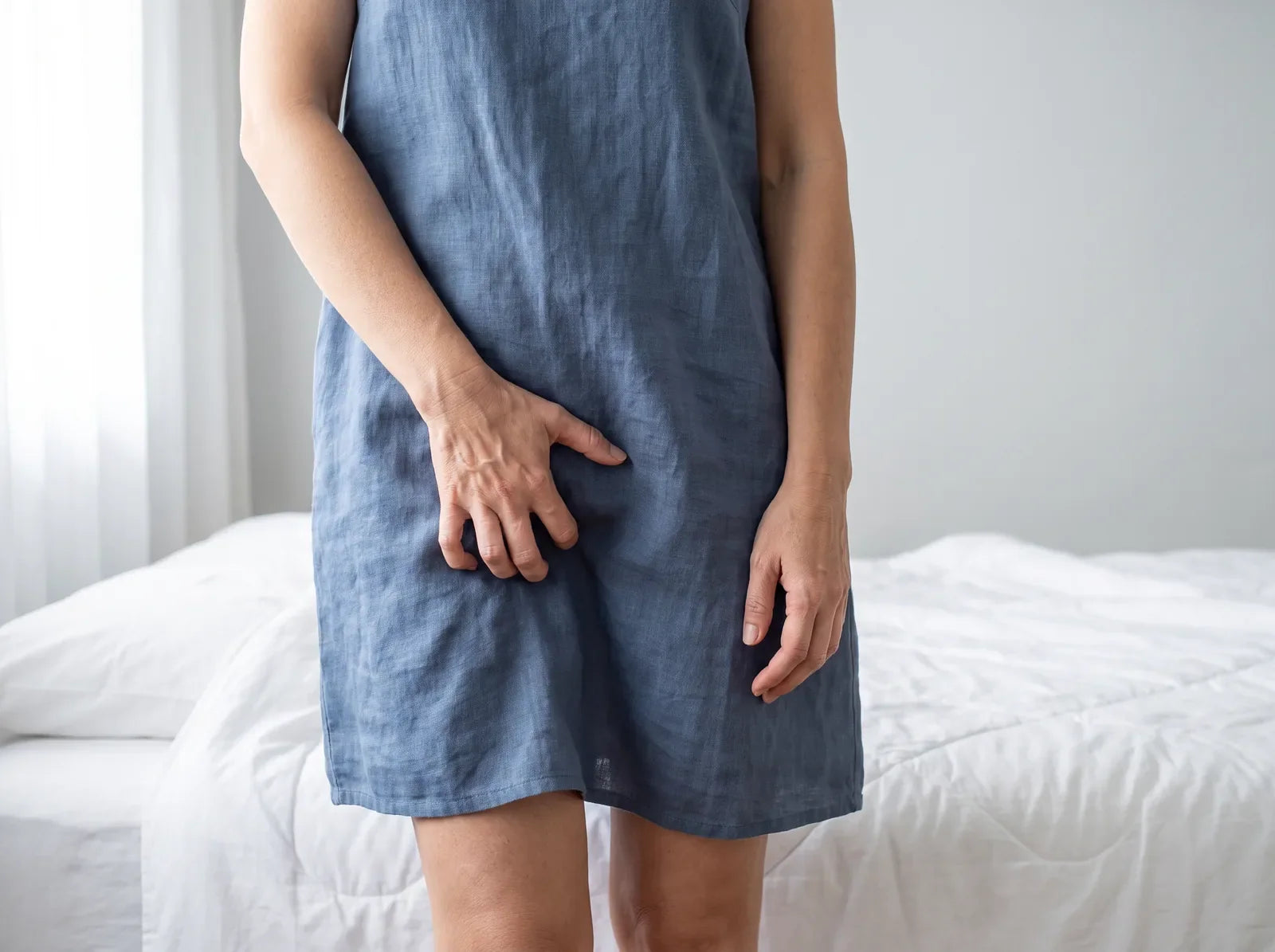
For most people, the GP is the first step. The consultation is free; the test comes out of your deductible, which is 385 euros in 2026 and 400 euros in 2027. A chlamydia test costs around 40 euros, and if more tests are needed it can come to a few hundred euros. Your insurer's statement usually shows that you received care, but not what kind. And your GP is bound by medical confidentiality.
You can go to the Sexual Health Centre of the GGD (the Dutch public health service) free of charge, and anonymously if you wish, if you belong to one of these groups:
- You have symptoms that point to an STI.
- Someone you had sex with has an STI.
- You are under 25.
- You are a man or a trans person and have sex with men.
- Sex is your work.
- You or your sexual partner come from a country where STIs are more common, such as in Asia, Africa, South and Central America or Eastern Europe.
- You had sex against your will.
The GGD shares nothing with your GP or your insurer. It can get busy, though, and who is eligible varies a little from region to region. If you fall outside these groups, as most people over 25 do, your GP is the place to go.
Since January 2025: chlamydia only with symptoms
Few people know this, but since January 2025 the GGD only tests for chlamydia if you have symptoms, or if your partner has chlamydia with symptoms. Chlamydia without symptoms usually clears up on its own, without causing harm, and this way fewer people receive antibiotics they don't need. Testing for the other STIs carries on as usual, and GPs sometimes still test for chlamydia. If you have chlamydia, you now only need to inform your regular partner or partners.
How a test works
First you are asked a few questions about symptoms and about who you have had sex with, so that it is clear which tests are needed. Men usually provide a urine sample, while women use a swab to take a little fluid from the vagina themselves. Sometimes a small tube of blood is added, or a swab from the throat or anus. The result is ready within a week or two, often by text message or email.
What is new in 2026 and 2027
The compulsory deductible is 385 euros in 2026 and will be 400 euros in 2027: it is rising in line with healthcare costs again, and the previously promised reduction to 165 euros will not go ahead. A test at your GP falls under that deductible. At the GGD the test remains free for the groups above, but the GGDs have less funding in 2026 and therefore fewer appointments: anyone who cannot get a place is referred to their GP.
Many GGDs offer young people up to 25 and men who have sex with men a free self-sampling test, sometimes sent to their home. If you fall outside these groups, your options are the GP or a home lab test from around 35 euros.
An antibiotic pill taken after sex, doxyPEP, is not recommended in the Netherlands; only where there is a high risk of syphilis can a doctor prescribe it after explaining it to you. Since August 2025 the United Kingdom has been offering a vaccine against gonorrhoea to men at increased risk, but a large study from July 2026 found no protection; the Dutch guideline advises caution and the Netherlands has no programme.
In 2025, gonorrhoea that does not respond to the usual injection was found in the Netherlands for the first time, and the number of syphilis diagnoses rose slightly, including among women. If your symptoms don't go away after treatment, go back. A rapid home test using lab technology for chlamydia and gonorrhoea is, in 2026 too, available only in the United States.