The short answer

Lubricant probably does not lower your chances of getting pregnant: among couples with no known fertility problems, women who used lubricant conceived just as quickly as women who did not. Timing makes the biggest difference: have sex on your fertile days, the six days before ovulation and the day itself.

We compared our lubricants ourselves and looked into what GPs, midwives and researchers have to say. This is what we recommend for couples trying for a baby:

  • Your own natural moisture is the best lubricant: take your time with foreplay.
  • Still need a little help? Choose a water-based lubricant with a short ingredient list, free of glycerine, fragrance or flavouring, such as Pjur Med Sensitive. Use only a small amount around your fertile days.
  • Never use spermicidal lubricant. And saliva or olive oil are no better alternative: they slow sperm down too.
  • Lubricant is not a contraceptive, even though it slows sperm down in the lab.
  • Not pregnant after a year of trying? See your GP together.

Which lubricant suits your situation? Find it in two clicks with our lubricant finder, or work out when your fertile days fall.

When you are hoping to get pregnant, you suddenly look at the bottle of lubricant on your bedside table in a very different light.

Lubricant quickly ends up on the list of suspects, and the advice you hear is contradictory too. One person tells you to avoid it, another says it actually helps if you are dry. The real answer is more reassuring than all those warnings suggest, with a few clear exceptions. After all, sex can stay enjoyable while you are trying for a baby.

Choose below where you would like to start.

Guide

Where would you like to start?

Would you like to understand first what lubricant does to sperm, or find out straight away which lubricant you can use? Choose a box and you will see where to go: here on this page or in one of our other blogs.

Choose a box and your route will appear.

Does lubricant reduce your chances of getting pregnant?

In the lab, most ordinary water-based lubricants slow sperm down considerably: mixed with such a lubricant, sperm swim noticeably less well after an hour, and some lubricants even kill part of them. Saliva and olive oil slow them down too.

But a test tube is not a bedroom: in the lab, the semen is mixed directly with the lubricant. And among couples without known fertility problems who are trying to conceive, the effect simply does not show. Women who used lubricant got pregnant just as quickly as women who did not (source). That applied to water-based lubricant, silicone-based lubricant and 'fertility-friendly' lubricant alike. Feel free to read that sentence twice.

A pipette and a small glass dish with a drop of clear fluid on a light surface
In the lab, sperm are mixed directly with lubricant. In bed, things work very differently.

A small effect cannot be ruled out entirely, and it has not been studied in couples who have been trying for a while. That is why we err on the side of caution: around your fertile days, use as little lubricant as possible, and if you do use something, choose one with as few substances as possible that could hinder sperm.

Which lubricant can you safely use when you are trying to get pregnant?

The very best lubricant is your own natural moisture, and the most thoroughly researched conception lubricant is Pre-Seed, which we do not sell (more on that further down). But you do not have to go to bed empty-handed. With an ordinary lubricant, check the label for the following:

  1. Water-based with a short ingredient list, or pure silicone
  2. No nonoxynol-9 and no 'spermicide'
  3. Preferably without glycerine; if it does contain it, use only a little
  4. No fragrance, flavour, warming or tingling effect
  5. For water-based lubricants: an acidity that suits the vagina, around pH 4 to 4.5 (you can read more below about conception lubricants with a higher pH)
A bottle of pjur med Sensitive water-based lubricant on a shelf above the washbasin in a bright bathroom
Pjur Med Sensitive: free from glycerine, preservatives and fragrance.

Our first choice is Pjur Med Sensitive. In our own lubricant comparison, it stood out for what it leaves out: no glycerine and no preservatives. And its acidity suits the vagina. It is a little thinner, so you will reach for the bottle slightly more often; that is the price of keeping the ingredient list as short as possible. Pjur states on its own website that its lubricants contain no spermicidal substance and behave 'neutrally' towards sperm. That has not been independently measured, and it does contain propylene glycol: a lubricant with the same ingredients turned out to be highly concentrated in one measurement (more on that below). So we would not call it sperm-friendly, but it is one of the purest water-based lubricants we carry.

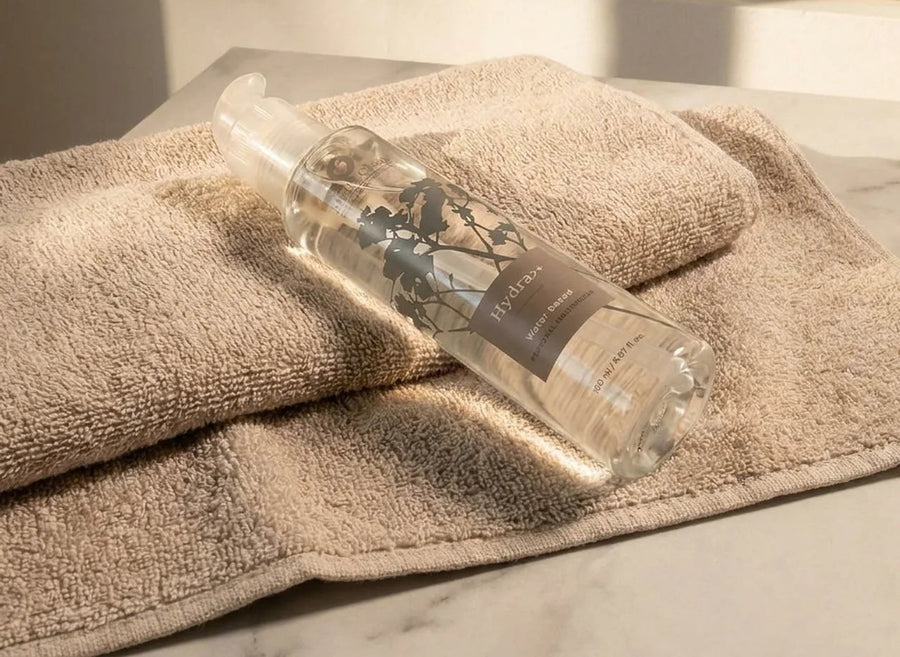
If you would like something with a little more body, Pjur Woman Aloe Vera came out of our comparison as a recommendation: slightly thicker, softer on the skin, easy to spread and long-lasting. Hydra+, the lubricant from our own brand House of Delight, is also a little thicker and stays where you apply it. Tester Rene put it like this: "It isn't sticky and doesn't go grainy when you use a bit more of it." Both of these do contain glycerine, though, so use only a little around your fertile days.

Whatever you choose: apply it only once you are already somewhat moist, and leave it out if you do not need it. You will find all lubricants with a short ingredient list in our water-based lubricants with a short ingredient list. Not sure which one suits you best? The lubricant finder below will help you in two clicks.

Lubricant finder

Which lubricant suits you?

Answer two questions and you will see which lubricant we recommend for you, with two alternatives and anything else you need to know for your situation.

What should you look for in a lubricant if you are trying to get pregnant?

Why that particular list? Because sperm cells are fussy. They swim best in fluid that is roughly as concentrated as semen and vaginal fluid themselves. Specialists call this osmolality. Vaginal fluid sits at 260 to 290 and semen at 250 to 380. Most lubricants are far above that, at 2,000 to 6,000, and that is mainly down to glycerine and propylene glycol, two very common ingredients in water-based lubricant. (Anyone who has ever sprinkled salt on cucumber slices knows what happens to something sitting in an overly concentrated environment: it loses moisture.)

That is not ideal for the vaginal lining either. In its new requirements published this year, the World Health Organization sets a limit of 1,200 for lubricant, about four times the body's own fluid. Ideally it stays below 380, according to doctors in a recent review.

Our own lubricants have been measured too

Three of the pure water-based lubricants we sell came out above that limit in a measurement of a whole range of lubricants: Pjur Woman Nude, Pjur Med Natural Glide and BIOglide were all above 2,000 (source), while the special fertility lubricant YES Baby came in at 333 (although the maker of YES did help fund the writing of that article). The acidity of the two Pjur lubricants sat neatly within the range of the vagina.

How much of that concentration remains once a little lubricant mixes with your own fluid in bed varies from woman to woman. And in the lab, sperm cells spend much longer in the lubricant than they do in bed, where the first ones can reach the cervix within a minute. That may explain why couples notice so little of it in practice.

And the acidity: pH 4 or pH 8?

A healthy vagina is acidic, with a pH of around 4, which is why an ordinary lubricant for vaginal use usually sits at around pH 4 to 4.5. The new World Health Organization requirements allow an acidity of 4 to 7. Semen, on the other hand, is alkaline, and below pH 6 sperm cells swim less well. Nature has its own solution for this: just after ejaculation, semen briefly thickens, precisely to protect the sperm cells from the acidic vagina.

Lubricants made specifically for couples trying to conceive, such as Pre-Seed, are therefore set to the acidity of semen. A recent review for GPs recommends exactly this kind of product to couples who want to get pregnant but still want to use lubricant: a pH of 7.2 to 8.5, a concentration like the body's own fluid, and no glycerine. The lubricants we sell are designed for the vagina, not for sperm cells. That is why we do not call them sperm-friendly.

What is best left out

That leaves the ingredients. Nonoxynol-9 is a genuine spermicide: so never. Glycerine and propylene glycol make a lubricant concentrated, and glycerine also seems to harm sperm cells in its own right: in the lab, the glycerine-free Pre-Seed did no harm to sperm cells, while lubricants with glycerine often did. Fragrance, flavour, a warming or tingling effect: lovely for another occasion, but when you are trying for a baby, we would rather leave them on the shelf.

Are parabens spermicidal?

No. A paraben is a preservative, not a spermicide like nonoxynol-9. That said, lubricants containing methylparaben and glycerine, such as K-Y Jelly, have been linked in research to sperm cells that move less well. How much of that is due to the parabens and how much to the glycerine cannot be separated in those experiments, and whether parabens reduce the chance of pregnancy has never been studied. Interestingly, the best-researched fertility lubricant, Pre-Seed, itself contains parabens. Preservatives can, however, cause irritation in some people.

You can read more about this in safe and unsafe ingredients in a lubricant, and what ‘natural’ does and does not mean in natural lubricants. Olive oil is natural too, and it strongly inhibits sperm cells: best to simply leave it in the kitchen.

Spermicidal lubricant: what is it, and is it reliable?

A spermicide contains a substance that kills sperm cells, usually nonoxynol-9. It is intended as a contraceptive. If you are trying to get pregnant, the answer is simple: never use it. If you are unsure, check whether the packaging says 'spermicidal', 'spermicide' or nonoxynol-9. Our range does not include any spermicidal lubricant.

If, on the other hand, you do not want to get pregnant, you should not rely on it either. With a spermicide alone, around 28 out of 100 women become pregnant within a year with typical use. These are American figures, which Dutch GPs also use in their clinical guidelines. In the Netherlands, spermicidal gel is used together with the diaphragm: you always coat the diaphragm with it.

Nonoxynol-9 can also irritate the mucous membranes and cause small sores, which is why the World Health Organization advises against it in lubricant. It offers no protection against HIV or other STIs.

Ordinary lubricant is not a contraceptive either, even though it slows sperm cells down in the lab. And 'non-spermicidal' on the packaging only means that it contains no spermicidal substance. It does not mean that the lubricant is good for sperm cells.

Sperm-friendly lubricant: what it does and does not do

Some lubricants are made specifically for couples who are trying to conceive, such as Pre-Seed, Conceive Plus and YES Baby: free of spermicidal substances and tailored to sperm cells, with the same pH as semen and without glycerine. Pre-Seed is the most thoroughly researched: in the lab, it hindered sperm cells the least. We do not sell these ourselves, but it is good to know they exist.

Even Pre-Seed is not completely neutral, although the effect in the tests was small. Much less is known about the other brands, or about Prefert, which is also often mentioned. And does such a lubricant increase your chances of getting pregnant? That has not been shown: in the large study among couples, women who used it became pregnant just as quickly as women who used no lubricant.

The benefit lies mainly in peace of mind, if you simply need a lubricant. You can read how this works out in practice further down, in our readers' experiences.
What GPs, gynaecologists and midwives say

In the Netherlands, the advice varies. GPs write that the vagina can stay dry when you have to make love on your fertile days time after time, even when one of you isn't really in the mood, and that a lubricant can help in that case. Gynaecologists, on the other hand, say: don't use a lubricant, because it can harm the sperm. Midwives sit somewhere in between: choose a lubricant without spermicidal ingredients that doesn't affect the sperm, or leave it aside for a while.

The patient association for people with fertility problems is the strictest: in its view, almost all lubricants, and saliva too, have a spermicidal effect. Its advice is to take your time over foreplay, and otherwise to choose a fertility-friendly brand.

And us? We sit somewhere in between, on the cautious side. First take the time to become naturally wet. If you do need something, choose a lubricant that hinders sperm cells as little as possible, and use as little of it as you can around your fertile days.

Saliva, oil or baby oil: better than lubricant?

Saliva is not a better alternative to lubricant if you are trying to get pregnant: saliva slows sperm down too. The same goes for olive oil. A pity, because both are always close at hand.

And baby oil? The studies disagree on that, but in a recent test baby oil also slowed sperm down, within just half an hour. We also advise against oil for a very practical reason: oil damages a latex condom, and that happens faster than you might think.

A jar of coconut oil, a bottle of olive oil and a bottle of baby oil on a wooden board by the window
Coconut oil, olive oil and baby oil: handy in the kitchen, but not a lubricant when you are trying for a baby.

Baby oil in the vagina can also increase the risk of a yeast infection, and the evidence on coconut oil is thin and contradictory. They simply are not made for use in the vagina. We found nothing on coconut oil and sperm.

If you use condoms, choose a water-based or silicone-based lubricant. Massage oil is lovely for a massage beforehand, but it is not a lubricant: not in the vagina and not with a condom.

Silicone-based lubricant when you are trying for a baby

Silicone-based lubricant contains no water, and therefore no glycerine or other glycols either. As a result it has no pH and no osmolality; the whole question of how concentrated it is simply does not apply here. Pjur Original, Pjur Woman and Pjur Med Premium Glide consist of two or three silicones and nothing else.

Little has been measured in the lab about the effect on sperm; in the first half hour, silicone lubricant generally had little effect on it. And in that large study of couples, silicone lubricant was not linked to a lower chance of conceiving. So if you like a silicone lubricant, there is no need to give it up when you are trying for a baby.

A bottle of pjur med Premium silicone-based lubricant on a wooden bedside table, next to a lit lamp and an open book
Pjur Med Premium Glide: two silicones, nothing else.

Our choice would then be the Pjur Med Premium Glide: two silicones without a binding agent, made for sensitive skin, and Pjur itself also recommends it during pregnancy. In our own comparison it was striking how little of it you need: a few drops last longer than a generous amount of a water-based product. The Pjur Woman feels a little fuller and glides more smoothly than the Original; the Original also did well in our test, although you need slightly more of it. Just do not use silicone lubricant with silicone toys. All pure silicone lubricants are gathered together in silicone-based lubricant without additives.

Lubricant when you are trying to conceive: what to use and what to avoid

Everything at a glance once more: what is known, and what we recommend if you want to get pregnant.

ProductSperm in the labOur advice when trying to conceive
Your own natural moisture, after foreplaysperm swim well in itthe best choice: take your time
Sperm-friendly lubricant (Pre-Seed, Conceive Plus)Pre-Seed inhibits sperm the least; less is known about the othersif you do need lubricant; we do not sell it
Water-based, short ingredient list, glycerine-free (Pjur Med Sensitive)not tested on sperm; same ingredients as a lubricant that turned out to be highly concentratedour pick from the range; use sparingly around your fertile days
Water-based with glycerine (Pjur Woman Aloe Vera, Hydra+, BIOglide)lubricant with glycerine often strongly inhibited sperm in the labpossible, but use a little, and only once you are already somewhat moist
Silicone-based (Pjur Med Premium Glide, Pjur Original)little is known; little effect in the first half hourpossible, but use a little; not with silicone toys
Spermicidal lubricant (nonoxynol-9)kills spermnever
Salivaalso inhibits spermbest avoided
Olive oilalso inhibits spermbest avoided
Baby oilstudies disagree; in a recent study it inhibited spermbest avoided: not for use inside the vagina and not with a condom
Coconut oilnothing is known about itbest avoided: not for use inside the vagina and not with a condom

Dry from sex on a schedule? How to help your body

When you are trying to get pregnant, you often end up making love on the fertile days, even when one of you is not really in the mood. The vagina may then stay dry. Sex becomes something that ‘has to happen’: ovulation, sex, done. Understandable, but not exactly good for arousal. And the pressure of trying can also take the joy out of lovemaking.

A woman's hand strokes her partner's forearm in soft candlelight
Five minutes of caressing instead of none is already a start.

The best lubricant is your own natural moisture. So take your time for foreplay, with kissing and caressing or a massage. It does not have to take long: five minutes instead of none is already a start. Sperm can swim well in the moisture of an aroused woman. If that still does not quite work, use a small amount of lubricant, and only apply it once you are already a little wet.

You are really not alone in this. In a large study of women who wanted to get pregnant, almost one in three had experienced pain during sex in the previous four weeks. Of those who tried lubricant, three quarters said it often or always helped (source). Men are affected too: in their new guideline, gynaecologists write that sex on a schedule can reduce desire, arousal and sexual function in men.

You also do not need to make love every day. To get pregnant, roughly every two to three days is usually enough; more often is fine, but not necessary. That already takes some of the pressure off. And in between, make love simply for the fun of it.

A toy can help you get in the mood; feel free to browse our toys for couples, such as the We-Vibe Sync 2, which the woman wears during sex (use it with a small amount of water-based lubricant). Would you like to make lovemaking slower and less goal-oriented? Then read about slow sex or about stress and sex. And exactly when those fertile days fall, you can work out below.

Calculator

Calculate your fertile days: the calculator

Enter the first day of your last period and how long your cycle usually lasts. The calculator uses the rule GPs apply: ovulation about two weeks before the next period, with the six days before it plus the day itself counted as fertile days. You will see the next three cycles.

Open the calculatorClose the calculator

This is an estimate. Ovulation can shift from month to month, even with a regular cycle. So never use the result as contraception. If you do not want to get pregnant, allow a wider margin: you can get pregnant from seven days before ovulation until two days after it, the nine days around ovulation. Even then, counting days does not protect well against pregnancy.

Readers' experiences

How does it work in practice, using lubricant while trying for a baby? Here is what other couples told us, and what you can learn from them.

  • Marloes, trying for a year

    After a year of trying, sex felt more and more like a chore, and all that sex made things sore down below.

    A special fertility-friendly lubricant made it a lot more comfortable for her. She doesn't credit it herself for the fact that she got pregnant afterwards. And she only ever used about a third of the recommended amount: a little goes a long way.

  • Sanne and her husband

    Just having sex because we felt like it made the days when we had to more fun again too.

    While trying, Sanne and her husband noticed they had slipped into only having sex when it counted, on the most fertile days. So they made a point of also having sex just for fun in between.

  • Ilse and her husband

    I like the lubricant myself, when I insert it beforehand.

    Her husband found the fertility-friendly lubricant too sticky when he had to apply it. It didn't help them get pregnant, she adds. That is worth knowing too: it is mainly about comfort.

  • Jeroen, trying for two years

    We felt like a baby factory.

    Because of their fertility treatment, Jeroen and his girlfriend knew exactly when it had to happen, so they also had sex on evenings when neither of them was in the mood. The low point came on holiday: after a long day of travelling they lay exhausted on the hotel bed and realised they still had to do it. After that they agreed to only have sex again when they both felt like it.

  • Linda, recently given birth and trying again

    Have I wasted this month?

    Because of the dryness after giving birth, Linda simply used ordinary lubricant during her fertile days, and then the doubts set in. Other mothers reassured her: one of them got pregnant twice using ordinary lubricant, and only advised against spermicidal lubricant and using a large amount. That fits with what the large study among couples showed.

When to take extra care, and when to see your GP?

If getting pregnant is taking longer, or you know the sperm quality is lower, you want to give yourselves the best possible chance. We understand that completely. Around the fertile days, it is then better to use no lubricant, or as little as possible. There is no need to worry: there is no evidence that lubricant makes you permanently infertile. Whether the inhibiting effect on sperm is fully reversible simply hasn't been researched yet.

Outside the fertile days, lubricant makes little difference to your chances of pregnancy: the chance lies mainly in having sex in the six days before ovulation and on the day itself. If you need to provide a sample for a semen analysis, don't use lubricant, massage products or a condom when collecting it. These can contain substances that kill sperm.

If you are still not pregnant after a year of regular sex, see your GP together. If the woman is 38 or older, the GP can refer you to a gynaecologist after a year of trying. And for anyone already growing impatient: of women aged 35 or younger who have sex frequently, 7 out of 10 are pregnant after six months, and 8 out of 10 after a year.

What you can do yourself as a man to support your sperm, you can read in boosting male fertility; for women there is boosting female fertility. And what heat does to sperm is explained in sauna and sperm quality.

Lubricant during pregnancy and after giving birth

If you are already pregnant, the effect on sperm no longer matters. Sex during pregnancy is almost always safe; if an exception applies to you, your midwife will tell you. We have not found any separate advice on lubricant during pregnancy from GPs or midwives. If you use condoms, choose a water-based or silicone-based lubricant.

Pjur itself recommends three of its lubricants for pregnancy and for the time you are breastfeeding: Pjur Med Natural Glide with natural ingredients, Pjur Med Premium Glide, which is silicone-based, and Pjur Woman Nude without preservatives. As your bump grows, spooning is a lovely position that puts no weight on your belly. You can read more about making love during this time in sex during pregnancy.

After giving birth: often drier than you are used to

After giving birth, the vagina can be drier than you are used to because of hormonal changes, and breastfeeding can make it drier too. This is quite common. Take your time to become aroused; a lubricant can help for a while if needed. If the mucous membrane is also sensitive or irritated, we like Pjur Med Repair Glide with hyaluronic acid. One of our testers uses it herself: “What I like about it is that it leaves a sort of very thin layer over your skin. That makes it feel a little less vulnerable.” You can also use it daily as a moisturising gel, without having sex. All the gentle lubricants for this period are gathered together in lubricant for during pregnancy and after giving birth.

To find out which other lubricant suits you, see our lubricant guide. And how much you need is explained in how to use lubricant.

Finally

Don't forget the man. Making love on command is far from always a pleasure for him either, and talking about dryness or an evening when things just won't work can be hard. A joke about 'duty calls' and an arm around each other often help more than the most expensive bottle. It is still making love, after all.

And if it doesn't work out this month? Then a new cycle comes along, and with it a new chance. The bottle can simply stay on the bedside table.

Voor na de kinderwens, of voor elke dag

Take the lubricant quiz

Water-based, silicone or something for sensitive skin? Which lubricant feels pleasant depends on your skin, what you use it for and whether a toy is involved. That’s exactly what the lubricant quiz asks.

  1. You answer a few short questions about your skin and how you use it.
  2. The quiz also asks about how long it should last, use in the bath or shower and natural ingredients.
  3. At the end you enter your email address and see three lubricants that suit you.
Start the lubricant quiz

Free, and done in a few minutes.

Frequently asked questions about lubricant and getting pregnant

Answers to your questions ClickTap on a question for the answer
Does lubricant affect your chances of getting pregnant?

Probably not, or only very slightly. In the lab, many lubricants slow sperm down, but among couples with no known fertility problems, women who used lubricant got pregnant just as quickly as women who did not. For couples who have been trying for longer, this has not been studied. So around your fertile days, use as little as possible, and choose a lubricant with a short ingredient list.

Which lubricant can you use if you are trying to get pregnant?

The best lubricant is your own natural moisture, so take your time over foreplay. If you do need a lubricant, the special fertility-friendly lubricant Pre-Seed is the most thoroughly researched; we do not sell it. From our own range, we would choose a water-based lubricant with a short ingredient list and no glycerine, fragrance or flavouring, such as Pjur Med Sensitive, or a pure silicone lubricant such as Pjur Med Premium Glide. Use only a little around your fertile days. And never a spermicidal lubricant.

Is lubricant spermicidal if you are trying to get pregnant?

No, ordinary lubricant contains no spermicide and is not a contraceptive. Even so, many lubricants slow sperm down in the lab, and some kill part of them. So ‘not spermicidal’ does not mean it is good for sperm. A genuinely spermicidal product contains a substance such as nonoxynol-9; if in doubt, check whether the packaging says ‘spermicidal’, ‘spermicide’ or nonoxynol-9. You can read exactly which ingredients slow sperm down in our blog on the ingredients of lubricants.

Are parabens spermicidal?

No. A paraben is a preservative; a genuinely spermicidal substance is something like nonoxynol-9. That said, research has linked lubricants containing methylparaben and glycerine, such as K-Y Jelly, to sperm that move less well. Whether parabens reduce the chance of pregnancy has never been studied, and the fertility-friendly lubricant Pre-Seed itself also contains parabens.

Is lubricant harmful to sperm?

In the lab, often yes: mixed with an ordinary water-based lubricant, sperm swim considerably less well after an hour, mainly because of glycerine and a high concentration. In bed things are different, because a little lubricant mixes with your own moisture and the fastest sperm reach the cervix within a minute. That is why little of this effect is seen in couples without fertility problems.

Which lubricant is best avoided if you are trying to get pregnant?

Never a spermicidal lubricant. Beyond that, preferably no lubricant with glycerine (if it does contain it, use only a little), no lubricant with fragrance, flavouring or a warming effect, no saliva or olive oil, and no oil in the vagina or with a condom. In the lab, K-Y Jelly and a Durex lubricant strongly slowed sperm down. And whichever lubricant you use, use as little as possible around your fertile days.

Is there such a thing as sperm-friendly lubricant, and does it work?

Yes, there are lubricants made for couples trying to conceive, such as Pre-Seed, Conceive Plus and YES Baby: free of spermicide and glycerine, with the same acidity as semen. In the lab, Pre-Seed hinders sperm the least, although even it is not entirely neutral; less is known about the others. It has not been shown that they increase the chance of pregnancy. We do not sell them.

Is spermicidal lubricant a reliable contraceptive?

No. With a spermicide alone, around 28 out of 100 women become pregnant within a year with typical use (American figures). In the Netherlands, spermicidal gel is used together with a diaphragm. Nonoxynol-9 can irritate the vagina and cause small sores, and it does not protect against STIs.

Can you use baby oil or coconut oil as a lubricant?

Preferably not. Studies disagree about baby oil, and in a recent study it did slow sperm down. Oil damages latex condoms, baby oil can increase the risk of a yeast infection, and neither is made for use in the vagina. We found nothing on coconut oil and sperm. If you use condoms, choose a water-based or silicone-based lubricant.

Can you use lubricant during pregnancy?

Yes. We have not found any specific advice on this from GPs or midwives; sex during pregnancy is almost always safe. Pjur itself recommends Pjur Med Natural Glide, Pjur Med Premium Glide and Pjur Woman Nude for pregnancy and breastfeeding. If you use condoms, choose a water-based or silicone-based lubricant, not oil.

Sources and accountability

For this article we used our own lubricant comparison, the questions we receive from customers, and the sources listed below. This article provides general information and does not replace a conversation with your GP, midwife or gynaecologist.

  1. Thuisarts.nl, Dutch College of General Practitioners (Nederlands Huisartsen Genootschap) (2026). I want to get pregnant. view source
  2. Thuisarts.nl, Dutch College of General Practitioners (Nederlands Huisartsen Genootschap) (2026). I want to find out why I am not pregnant yet. view source
  3. Thuisarts.nl, Dutch College of General Practitioners (Nederlands Huisartsen Genootschap). I am considering a natural method to avoid getting pregnant. view source
  4. Dutch Society of Obstetrics and Gynaecology (Nederlandse Vereniging voor Obstetrie en Gynaecologie), deGynaecoloog.nl (2025). Getting pregnant healthily. view source
  5. Royal Dutch Organisation of Midwives (Koninklijke Nederlandse Organisatie van Verloskundigen), deVerloskundige.nl. Sex to make a baby. view source
  6. Freya, Dutch patient association for people with fertility problems. Sexuality and fertility. view source
  7. Dutch Society of Obstetrics and Gynaecology (Nederlandse Vereniging voor Obstetrie en Gynaecologie) (2026). Guideline on male subfertility, module on sexual dysfunction. view source
  8. Dutch College of General Practitioners (Nederlands Huisartsen Genootschap) (2023). NHG Guideline on Contraception (M02). view source
  9. World Health Organization, UNFPA and FHI360 (2012). Use and procurement of additional lubricants for male and female condoms: advisory note. view source
  10. World Health Organization and UNFPA (2026). Specifications for personal lubricants. WHO Technical Report Series, no. 1067, annex 6. view source
  11. Vanderschee R, Kostov S (2025). Approach to lubricant use for sexual activity. Canadian Family Physician, 71(7-8). view source
  12. Molin EAD, Leite GAA, Lazzari VM (2024). A systematic review focused on lubricant use and sperm quality. Journal of Applied Toxicology, 44(10). view source
  13. Pradit L, Somsak P, Piromlertamorn W et al. (2025). The effects of coital lubricants on sperm motility and vitality. JBRA Assisted Reproduction, 29(2). view source
  14. Bond JC, Schildroth S, White KO et al. (2025). Strategies for self-management of painful intercourse among female pregnancy planners. Journal of Sexual Medicine, 22(7). view source
  15. McInerney KA, Hahn KA, Hatch EE et al. (2018). Lubricant use during intercourse and time to pregnancy: a prospective cohort study. BJOG, 125(12). view source
  16. Edwards D, Panay N (2016). Treating vulvovaginal atrophy/genitourinary syndrome of menopause: how important is vaginal lubricant and moisturizer composition? Climacteric, 19(2). view source

Leave a comment

Note: Comments must be approved before they are published.