
Kegel balls and pelvic floor trainers
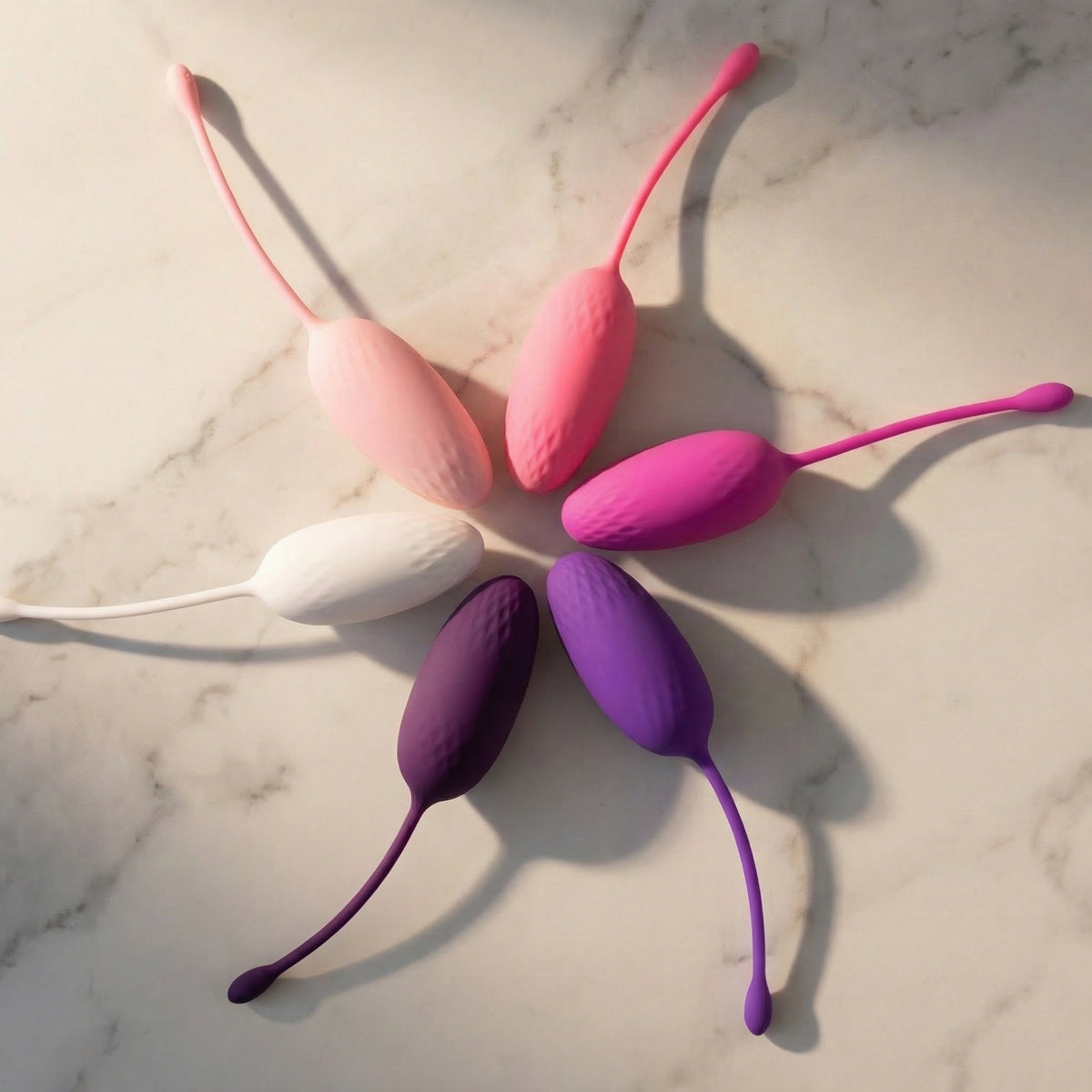
Kegel balls and pelvic floor trainers help you strengthen your pelvic floor muscles step by step: for more sensation during sex and as support for mild symptoms after childbirth or during the menopause. From a light single ball to a trainer with an app. Which starting weight suits you? The kegel ball decision guide works it out for you.
-


-


-


-

 Rose quartz yoni eggs: set of three, S, M and L
- Regular price
- €49,95
- Sale price
- €49,95
- Regular price
-
- Unit price
- per
-


-

 Fun Factory Smartball Uno: beginner's pelvic floor ball with a loose inner ball
- Regular price
- €18,95
- Sale price
- €18,95
- Regular price
-
- Unit price
- per
-

 Metis Oba kegel set: 6 kegel weights from 15 to 55 grams, with 3 holders
- Regular price
- €36,95
- Sale price
- €36,95
- Regular price
-
- Unit price
- per
-
 Set of dark green jade yoni eggs: three smaller sizes
- Regular price
- €39,95
- Sale price
- €39,95
- Regular price
-
- Unit price
- per
-

 Jade Yoni Egg (large): pelvic floor trainer for beginners
- Regular price
- €21,95
- Sale price
- €21,95
- Regular price
-
- Unit price
- per
-

 Fun Factory Smartballs Duo: kegel balls with vibrating inner balls
- Regular price
- €24,95
- Sale price
- €24,95
- Regular price
-
- Unit price
- per
-
 Je Joue Ami: complete training set for a strong pelvic floor
- Regular price
- €54,95
- Sale price
- €54,95
- Regular price
-
- Unit price
- per
-

 FemmeFit Advanced: advanced kegel set, 125 to 200 grams
- Regular price
- €39,95
- Sale price
- €39,95
- Regular price
-
- Unit price
- per
-

 Svakom Nova kegel set: three kegel balls of 49, 75 and 95 grams
- Regular price
- €39,95
- Sale price
- €39,95
- Regular price
-
- Unit price
- per
-

 My Own Filo Tulip: pelvic floor aid with vibration
- Regular price
- €99,95
- Sale price
- €99,95
- Regular price
-
- Unit price
- per
-


-

 Magic Motion Flamingo: vibrating egg with app, also for long-distance use
- Regular price
- €74,95
- Sale price
- €74,95
- Regular price
-
- Unit price
- per
-

 Kegel balls 78 grams / Fifty Shades of Grey collection
- Regular price
- €22,95
- Sale price
- €22,95
- Regular price
-
- Unit price
- per
-

 Satisfyer V Balls: kegel ball set in three weights
- Regular price
- €34,95
- Sale price
- €34,95
- Regular price
-
- Unit price
- per
-

 LELO Luna Beads Mini: small 29 mm kegel balls, set of four
- Regular price
- €59,95
- Sale price
- €59,95
- Regular price
-
- Unit price
- per
-

 Metal Ben Wa Balls/ Fifty Shades of Grey Collection
- Regular price
- €19,95
- Sale price
- €19,95
- Regular price
-
- Unit price
- per
-

 LELO Luna Beads: kegel balls in two weights for the pelvic floor
- Regular price
- €54,95
- Sale price
- €54,95
- Regular price
-
- Unit price
- per
-

 My Own Filo Iris: G-spot vibrator with suction function and three motors
- Regular price
- €79,95
- Sale price
- €79,95
- Regular price
-
- Unit price
- per
-

 Perifit Care: pelvic floor trainer with app and games
- Regular price
- €149,95
- Sale price
- €149,95
- Regular price
-
- Unit price
- per
-

 Perifit Care+: small, flexible pelvic floor trainer with app
- Regular price
- €159,95
- Sale price
- €159,95
- Regular price
-
- Unit price
- per


Buying kegel balls: how does the training work?
A kegel ball is a small weight that you wear in the vagina. Your pelvic floor muscles hold it in place automatically, and that holding is the whole exercise. It works like training with weights: you start light and only move up once the ball stays in place without effort. Ten to fifteen minutes a day is usual, while going about ordinary tasks at home. A large, light ball is the easiest step; small and heavy is the hardest.
Strong pelvic floor muscles contribute to more sensation during sex, more intense orgasms and better bladder control. For mild symptoms after childbirth or during the menopause, pelvic floor physiotherapists recommend this training too. You can read the background, with a week-by-week build-up plan, in all about pelvic floor balls; for personal advice, see our decision guides and tests.
Starting with a single ball
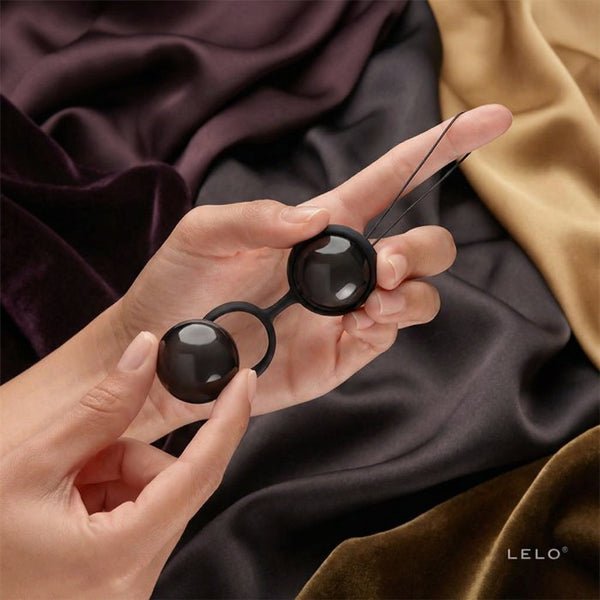
If you have never trained before, start with a single ball: it is lighter and easier to hold than a double one. The Smartball Uno from Fun Factory weighs about 36 grams and has a loose ball inside that taps along with every step, so your muscles respond automatically. The LELO Luna Beads Mini are smaller (29 millimetres) and you combine them in a holder from 28 to 74 grams; LELO recommends them for women under thirty and women who have not yet given birth. A large jade yoni egg is a beginner's model for the same reason: a large egg is easier to hold than a small one.
Kegel sets with increasing weights
A set takes the guesswork out: you know exactly what the next step is. The Ami consists of three balls of 47, 78 and 106 grams, somewhat larger than average, each with a loose ball inside that moves along with you. The standard LELO Luna Beads are four small balls of 28 and 37 grams that you assemble into a pair in a silicone harness. The Metis Oba kegel set starts at just 15 grams and goes up to 110 grams with three holders; in our guide, this is the set we most often recommend to beginners.
The Kegelset Oba Moon has six kegels from 25 to 115 grams and, at 2.65 centimetres, is slightly narrower than usual. The Oba Motion goes from 35 to 125 grams, with a steel ball in five of the six kegels. The V Balls from Satisfyer and the Nova from Svakom are sets of three. If your pelvic floor is already trained, there is the FemmeFit Advanced from 125 to 200 grams; it is explicitly not intended as a first set.
Training with an app, sensor or vibration
A pelvic floor trainer with biofeedback shows you what you are doing. You insert the Perifit Care like a tampon and pair it with a free app; two sensors measure the strength of your pelvic floor and the pressure in your abdomen, and the app turns this into games and exercises. The Perifit Care+ is smaller and flexible, and also lets you train sitting and standing. Both are CE-certified medical devices, intended for three to five sessions of about ten minutes per week.
The LELO Luna Smart Bead works without an app: it vibrates as a signal to contract, measures how strongly you do so and chooses the next exercise, in about five minutes a day. In the Kegelset met Extra Fun, one of the four kegels vibrates, with a remote control. And the Flamingo from Magic Motion is a vibrating egg with an app that also includes kegel exercises. More toys you control by phone can be found under app-controlled toys.
Silicone, jade or rose quartz?
Many kegel balls have a silicone exterior, and that is the easiest to keep clean: lukewarm water with a little mild soap, or a toy cleaner. Jade and rose quartz yoni eggs are natural stone. They are beautiful and feel cool to the touch, but need more care: never boil them, as the stone can crack, and do not wear them during your period or pregnancy, nor when you have an infection. How to use a stone safely is explained in our guide to the rose quartz yoni egg. Related products can be found under yoni wands.
When should you first consult your GP or pelvic floor physiotherapist?
Kegel balls are intended for a pelvic floor that lacks strength. A pelvic floor can also be too tense, and the symptoms are similar; squeezing exercises and kegel balls then make things worse. If in doubt, first do the self-test in exercises for a stronger pelvic floor, or have a pelvic floor physiotherapist assess the state of your muscles.
Hold off on training if it hurts, if you have an infection, if you feel a heaviness down below, during pregnancy and in the first weeks after childbirth or surgery; in that case, ask your midwife, GP or pelvic floor physiotherapist first when you can start. If you have (or suspect) a prolapse, consult your GP or pelvic floor physiotherapist first; if they approve of training, a light single ball is the safest start. Always use a little water-based lubricant, especially during perimenopause and menopause, when the vaginal skin becomes drier.
Frequently asked questions about kegel balls
Which kegel balls are suitable for beginners?
A light, slightly larger single ball, such as the Smartball Uno, or a set that starts low, such as the Metis Oba kegel set with a first kegel of 15 grams. A large, light ball is the easiest to hold. The kegel ball decision guide gives you a starting weight in just a few questions.
How long and how often should I wear kegel balls?
Start with fifteen minutes a day while walking or doing household chores and build up gradually; at first, keep it to half an hour at most. Short sessions three or four times a week are better than one long session once a week, and never sleep with a ball inserted. You will find a week-by-week plan in the build-up schedule.
Do kegel balls help with urine leakage after giving birth?
Pelvic floor training is usually the first thing midwives and pelvic floor physiotherapists recommend for mild symptoms after giving birth, and kegel balls are a useful aid. Only start after your postnatal check-up and after talking it through, because the muscles first need time to recover. If the urine leakage persists, have yourself examined by a pelvic floor physiotherapist.
Can I use kegel balls during the menopause?
Yes, that is exactly when they are worthwhile, because with less oestrogen the pelvic floor can become weaker. The vaginal skin does become drier, so use plenty of water-based lubricant when inserting them. You can read how the menopause changes lovemaking in menopause and sex.
What is the difference between a kegel ball and a yoni egg?
Both are small weights for the pelvic floor. A kegel ball is made of silicone, often with a loose ball inside and a small loop for removing it. A yoni egg is made of polished stone, such as jade or rose quartz, with a cord threaded through a small hole. Stone needs more careful maintenance; silicone is the easiest to keep clean.
When is it better not to use kegel balls?
If you have pain, an infection or an overly tense pelvic floor, during pregnancy, and shortly after giving birth or after surgery in the pelvic area. If you have a prolapse, talk to someone first as well. In these cases, ask your GP or pelvic floor physiotherapist what is sensible for you; with a tense pelvic floor, relaxation helps more than training.
How do I clean kegel balls?
Wash them before and after every training session with lukewarm water and a little mild soap, or with a toy cleaner, let them dry thoroughly and store them separately. Only use water-based lubricant; silicone lubricant damages silicone. Rinse a stone egg under lukewarm water and never boil it.
What does a kegel set cost?
A single ball or a simple set costs roughly twenty to forty euros, while the sets from LELO and the Ami are around fifty to sixty euros. A trainer with an app and sensors, such as the Perifit, costs around one hundred and fifty euros.


Need help or advice?
We are happy to help


