The short answer

You do not catch a yeast infection from your partner, but sex can trigger one: through friction, a dry vagina or a product that irritates. You can have sex again as soon as it no longer hurts. With bacterial vaginosis (BV), semen makes the vagina less acidic, which is why that unpleasant odour often returns precisely after sex without a condom.

  1. During treatment with a vaginal product, and for up to three days afterwards, a condom is not reliable.
  2. Wash with lukewarm water only and take your time until you are aroused and moist, or use a mild lubricant for sensitive skin.
  3. If BV keeps coming back, use a condom and ask your doctor about the new research into treating your partner too.
  4. The first time, or more than three times a year: see your doctor. With a fever or abdominal pain: the same day.

Yeast infection, BV or something else? Check it in our symptom finder.

A lovely evening together, and two days later the itching or that smell is back.

If you have been through that a few times, you naturally start to dread making love a little. And you would rather not talk about it, because it feels dirty. It isn't: three out of four women get a yeast infection at some point, and washing with soap tends to make things worse rather than better.

Sex is by no means always the cause, but it can certainly tip the balance in your vagina. With a yeast infection that works slightly differently than with bacterial vaginosis, and that difference determines what you do, and what your partner can do.

What is the difference between a yeast infection and bacterial vaginosis?

With a yeast infection, the yeast candida, which normally lives in your vagina, overgrows, causing inflammation with itching and white discharge. With bacterial vaginosis, the balance of bacteria is disturbed: the lactic acid bacteria decrease, other bacteria take over, and the discharge starts to smell, without pain and usually without itching.

FeatureYeast infectionBacterial vaginosis
What you noticeitching, white discharge that is sometimes lumpy, burning when you urinatea lot of greyish-white discharge
Smellno different from usualsmells bad, often fishy and especially after sex
Pain during sexoften, yesno
What sex does to itnot an STI; friction and a dry vagina can trigger itnot an STI; semen makes the vagina less acidic, a new partner increases the risk

An STI such as trichomonas or chlamydia can resemble either one. More on this in recognising and testing for STIs and in painful sex due to vaginal infections.

Can you get a yeast infection from sex?

Not the way you get an STI: the yeast already lives in your vagina, you don't catch it from someone else. Sex can, however, wake it up. And if you have a lot of yeast, you can pass it on to a partner with small wounds; in a man that sometimes causes an inflamed glans.

A yeast infection is not an STI, and neither is BV. But sex can disturb the balance, and with BV sex plays a bigger role than with a yeast infection.

Why it flares up after sex in particular

During sex, a few things come together:

  1. Friction. After a lot of cycling or a lot of sex, yeast settles more easily in tiny wounds and tears, according to Swedish health experts.
  2. A dry vagina. If you have sex before you are really wet, there is more friction. Take your time, or use a mild lubricant; that reduces the risk of a yeast infection.
  3. Semen. A healthy vagina is acidic, around pH 4, and semen can make it less acidic. That is why, with BV, the smell is often stronger after sex without a condom, and also just after your period.
  4. A new partner. A new partner or several partners seems to increase the risk of BV, and that also applies to women who have sex with women. A condom may offer a little protection.
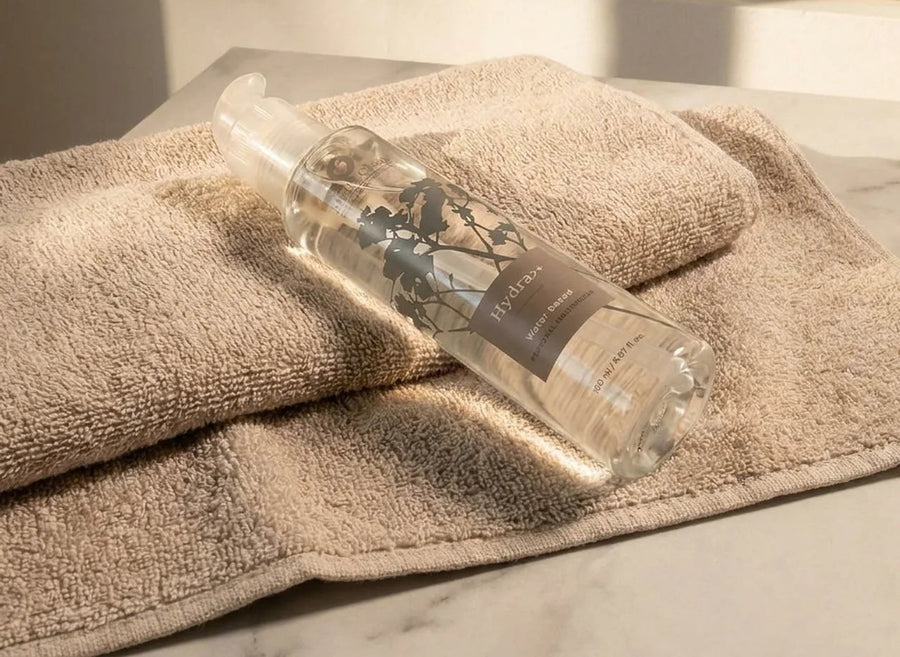
  5. What else plays a part. Soap, douches and spermicides cause irritation. And take a look at the label of your lubricant: our own Hydra+ lists propylene glycol and glycerine in second and third place, and in the natural BIOglide plant-based glycerine is even the first ingredient. What to choose if you react quickly is covered further down.

Other causes of itching, from a condom to the menopause, are covered in itching after sex. Below you can check what best matches your symptoms.

Symptom finder

Yeast infection, BV or something else?

Three short questions, and you will see what best matches your symptoms and what you can do yourself. This is not a diagnosis; only your doctor can make one.

1. What do you notice most?

2. Is this familiar to you?

3. Do any of these apply? Tick whatever is true.

Can you have sex with a yeast infection or BV?

Yes, as long as it doesn't hurt. With a yeast infection the mucous membrane is often red and sensitive, and then stopping is the best advice, also from Dutch doctors. BV doesn't hurt, but semen often makes the smell worse, and a condom helps with that.

Gritting your teeth doesn't pay off. If you have sex while it hurts, you can end up with recurring pain during sex, and because of the tiny tears you also catch or pass on an STI more easily; Swedish health experts warn explicitly about this. Sophie (27) used to not want to be the one who said no. Afterwards she had pain during sex for a whole year, even without a yeast infection. Now she waits a few days until the infection has really cleared.

After a cream or tablet, a condom is unreliable for up to three days

Vaginal antifungal treatments, and the suppositories and cream for BV, can damage the rubber of a condom or diaphragm. Up to three days after the last application these don't protect properly, not against pregnancy and not against an STI either.

Being intimate, with no pressure

A yeast infection doesn't have to mean a week apart. Kissing, caressing, lying close together: anything that doesn't hurt is fine. Just say it: “I've got thrush again, I'd rather just cuddle tonight.”

Does my partner need treatment too?

With a yeast infection, no, unless your partner has symptoms too, such as a red, irritated glans; then an antifungal cream helps (here too, a condom protects less well). For BV, the Dutch doctors' guideline still says no. But an Australian study from 2025 shows something different.

More than 160 couples took part, each a woman with BV and her steady boyfriend. In half of them, the man also received tablets and a cream for his penis for a week. Within twelve weeks, BV returned in 35 percent of the women whose partner took part, against 63 percent in the others (source). The difference was so large that the study was stopped early. If you keep struggling with that smell, that is encouraging news. It does ask something of him: the men sometimes suffered from nausea, headaches or a metallic taste. American gynaecologists published new guidance on treating the partner at the end of 2025.

In the Netherlands this is not yet standard practice. If BV keeps coming back and you have a steady partner, ask your doctor about it.

Women who have sex with women

The English national health service writes that BV can also pass between women, and that a female partner sometimes needs treatment as well. In the Netherlands this is not standard practice. Our advice: clean toys you share in between, or put a condom on them that you change (this is how to clean a toy).

Why does it keep coming back after sex?

Often there is no clear reason. In five to eight out of every hundred women before the menopause, a yeast infection comes back more than three times a year, even if they are otherwise healthy. And BV returns in half to four out of five women within a year of a course of treatment. What does help is disturbing things as little as possible:

Before sex

Only lukewarm water, no soap or douche. Take your time until you are wet, or reach for a mild lubricant.

During

Stop if it stings. With BV or a new partner: a condom, without spermicide.

Afterwards

Just rinse the outside with lukewarm water, if you like. Nothing more is needed.

With a yeast infection that keeps coming back

See your doctor. They will check whether it really is a yeast infection, because the same symptoms can also come from tense pelvic floor muscles or a skin condition such as lichen sclerosus. Your doctor will also look at contributing factors, such as antibiotics, diabetes or hormones. After that, you may be given a schedule of antifungal tablets: one tablet as soon as symptoms appear, or once a month for three to six months.

With BV that keeps coming back

Doctors don't recommend medication to prevent BV. What you can do yourself: use a condom during sex, avoid douching, and, if you have a steady partner, ask about the new research on treating the partner too.

Which lubricant if you are sensitive to it?

Choose a fragrance-free lubricant with as few additives as possible: silicone-based, or water-based with little glycerine and propylene glycol. An article in the Canadian journal for family doctors recommends the same for women who keep getting infections or irritation.

If a lubricant contains a lot of glycerine or propylene glycol, it is far more concentrated than your own moisture and draws water out of the mucous membrane; that is why the World Health Organization sets a limit on how much may be in it in its requirements for lubricants. You often read that glycerine feeds a yeast infection, but we found no hard evidence for that. What we did find: in women around and after menopause, and in women who had had BV before, the protective lactic acid bacteria stayed away longer after a single use of such a strong lubricant (source), although that comes from a small study involving an internal ultrasound. Across the group as a whole, nothing changed.

What we recommend

For this, our favourite is Pjur Med Premium Glide. It contains two silicones and nothing else, and for anyone who is easily irritated, it is one of the gentlest we stock. When we compared lubricants side by side, we also noticed how economical it is: a few drops last longer than a generous dollop of a water-based lubricant. The one exception is a silicone toy, because it damages the material, so leave it on the shelf then. In that case, choose the water-based Pjur Med Sensitive, which stands out mainly for what it does not contain: no glycerine and no preservatives. It does contain propylene glycol, and its pH suits the vagina.

If your mucous membranes tend to become dry or sensitive even without an infection, Pjur Med Repair Glide with hyaluronic acid leaves a thin layer over the skin; it is not a treatment for thrush or BV, and it does contain glycerine. Our own Hydra+ suits anyone looking for a lubricant that works with all toys and condoms and stays slippery for a long time; it also contains propylene glycol and glycerine. Oil, such as coconut oil, causes latex condoms to tear.

“A lubricant that also works for massage”

We get that question regularly. Again, silicone is the answer: Pjur Med Premium Glide and Pjur Woman, with just three ingredients, are both also suitable for massage. You will find an overview of our silicone lubricants without additives; to dig into the labels, see lubricant ingredients.

Lifestyle photo: a woman of around fifty walking through the dunes in winter

Probiotics, boric acid and other tips from the internet

Yoghurt in the vagina, a clove of garlic, tea tree oil: against a yeast infection they do not help, and tea tree oil and douching actually cause irritation. Doctors do not recommend probiotics and vitamin C for BV either: as far as is known they are not harmful, but there is no evidence that they work.

The Swedish health website takes a level-headed view: lactic acid bacteria for vaginal use may help against the odour while they are in place, but this has not been proven. In Sweden, a non-prescription treatment for BV is available, but only once a doctor has diagnosed BV the first time.

And boric acid?

Boric acid suppositories are freely available online. The Dutch guideline for doctors mentions boric acid capsules only for a rare type of yeast that responds poorly to the usual treatments, and adds that they are not available in the Netherlands. We would not start on them yourself: if a yeast infection keeps coming back, your doctor can have a culture done to find out which yeast it is and which treatment suits it. Margaret (61), who has had recurring yeast infections for five years, left the suppositories from the internet alone: “That scares me.” We understand her.

Readers' experiences

Margaret (61), recurring for five years

Nobody wants to talk about vaginas or sexual health.

Ever since she was given three kinds of antibiotics for an abscess on a molar, the yeast infection comes back every two to three weeks. She is afraid she and her husband pass it back and forth, because that has happened before.

Petra (42), a new diagnosis after six years

It never went away completely.

For six years, Petra's yeast infection kept coming back, and a year of tablets did not help. Only a dermatologist specialising in the vulva found lichen sclerosus and a different type of yeast. All that time she felt dirty, showered several times a day and had no sex life.

Monique (42), engaged

I'd love to make love, and then I can't.

Because of medication that suppresses her immune system, Monique gets a yeast infection every few months. When it itches and burns, they do not make love; she does not want to pass it on to him. That frustrates her, for his sake too.

Laura (34), long without condoms

I've taught quite a few men about Canesten.

Laura was on the pill, so they did not use condoms, and she thinks her boyfriend kept giving the yeast infection back to her. That is how it went in every relationship until she was 27; her boyfriends sometimes had a sore, dry or flaky penis themselves.

Rachel, BV after every time they had sex

It came back as soon as I slept with him again.

The treatment from her doctor worked, but after having sex with her boyfriend the BV was back. Only when they both took antibiotics around the same time did it stay away.

When should you see your GP?

A yeast infection or BV is harmless and often clears up by itself. Do make an appointment if:

  1. you have the symptoms for the first time;
  2. you are pregnant (or consult your midwife);
  3. it bothers you a lot;
  4. the symptoms have not eased after two weeks, or a product you bought yourself does not help enough;
  5. you have a yeast infection more than three times a year;
  6. the discharge is yellow-green, brown or red while you are not having your period;
  7. you develop vaginal discharge after menopause;
  8. you might have an STI;
  9. the entrance to your vagina is red and swollen and has small sores.

Call your doctor or the out-of-hours service the same day if you have a fever or pain in your lower abdomen.

During the examination, the doctor looks using a speculum and, if necessary, takes a little fluid with a cotton swab, which can also be tested for STIs. How an STI test works is explained in recognising and testing for STIs.

Finally

A yeast infection or BV says nothing about how clean you are. It is a balance that tips over now and then, and that usually rights itself with lukewarm water, a little patience and, at the right moment, a condom. If it keeps tipping over, do feel free to ask your doctor again whether it really is a yeast infection, and what your partner can do. After that, making love can simply be enjoyable again.

Which lubricant suits you?

Take the lubricant quiz

Water-based, silicone or something for sensitive skin? Which lubricant feels pleasant depends on your skin, what you use it for and whether a toy is involved. That’s exactly what the lubricant quiz asks.

  1. You answer a few short questions about your skin and how you use it.
  2. The quiz also asks about how long it should last, use in the bath or shower and natural ingredients.
  3. At the end you enter your email address and see three lubricants that suit you.
Start the lubricant quiz

Free, and done in a few minutes.

Frequently asked questions about yeast infections and BV after sex

Answers to your questions ClickTap on a question for the answer
Can you have sex with a yeast infection?

Yes, as long as it doesn't hurt. If it stings, stop, because carrying on can lead to pain during sex that keeps coming back. After using an antifungal cream or vaginal tablet, a condom is not reliable until three days after the last dose.

Can sex upset the pH of your vagina?

Yes. A healthy vagina is acidic, at around pH 4, and semen can make it less acidic. That is why, with bacterial vaginosis, the smell is often stronger after sex without a condom; a condom helps prevent this.

Is more discharge after sex normal?

Yes, when you are aroused your vagina produces more moisture. If the discharge itches, smells bad or has a different colour, it could be a yeast infection, BV or an STI; the finder above will help you get started.

Can a man get a yeast infection after sex?

He can, if his partner has a lot of yeast and especially if he has small sores, although an inflamed glans caused by yeast usually does not come from sex. In that case an antifungal cream, available without a prescription, will help (here too a condom protects less well); if he has no symptoms, he doesn't need to do anything.

Is bacterial vaginosis an STI?

No, BV does not count as an STI, neither in the Netherlands nor in England. Sex does play a part, though: semen makes the vagina less acidic and a new partner increases the chance. If it keeps coming back, ask your doctor about the new research on treating your regular partner as well; in the Netherlands this is not yet standard practice.

Can lubricant cause a yeast infection?

There is no hard evidence for that, but a lubricant with perfume, a warming ingredient or a lot of glycerine and propylene glycol can irritate the mucous membranes. If you react easily, choose for example Pjur Med Premium Glide or Pjur Med Sensitive.

How long should you wait to have sex after Canesten or another antifungal treatment?

There is no fixed waiting time: as long as it hurts, wait. However, a condom or diaphragm is not reliable until three days after the last cream or tablet; the same applies to the pessaries and cream for BV.

Can you buy a yeast infection treatment yourself?

Yes, at the pharmacy or chemist you can get vaginal creams and tablets without a prescription, if you recognise the yeast infection from a previous time. The first time, have your doctor take a look first, because it could also be something else. The same applies if you are pregnant or have small sores, or if it comes back more than three times a year. If you have a fever or abdominal pain, call your doctor or the out-of-hours doctor's service the same day.

Sources and references

Based on Thuisarts and the NHG Guideline, the public health websites of Sweden and England, recent research and the labels on our own product pages.

  1. Thuisarts (NHG). I have a vaginal yeast infection; and I often get a vaginal yeast infection. view source
  2. Thuisarts (NHG). I have too many normal bacteria in my vagina; and I have vaginal discharge. view source
  3. Thuisarts (NHG). I have an inflamed glans. view source
  4. Dutch College of General Practitioners. NHG Guideline Fluor vaginalis (M38), last revised January 2024. view source
  5. 1177 (Sweden). Bakteriell vaginos, illaluktande flytning från slidan; and Svamp i underlivet. view source
  6. NHS (England, 2026). Bacterial vaginosis. view source
  7. Vodstrcil, L.A. et al. (2025). Male-partner treatment to prevent recurrence of bacterial vaginosis. New England Journal of Medicine, 392(10), 947-957. view source
  8. American College of Obstetricians and Gynecologists (2025). Concurrent sexual partner therapy to prevent bacterial vaginosis recurrence. Obstetrics & Gynecology, 146(6). view source
  9. Brown, S.E. et al. (2025). Assessment of the vaginal microbiota before and after use of hyperosmolal lubricant during transvaginal ultrasound. American Journal of Obstetrics and Gynecology, 233(1). view source
  10. Vanderschee, R. and Kostov, S. (2025). Approach to lubricant use for sexual activity. Canadian Family Physician, 71(7-8). view source
  11. Abbe, C. and Mitchell, C.M. (2023). Bacterial vaginosis: a review of approaches to treatment and prevention. Frontiers in Reproductive Health, 5. view source
  12. World Health Organization (2026). Specifications for personal lubricants. WHO Technical Report Series 1067, annex 6. view source

Last updated on 19 November 2026.

Leave a comment

Note: Comments must be approved before they are published.